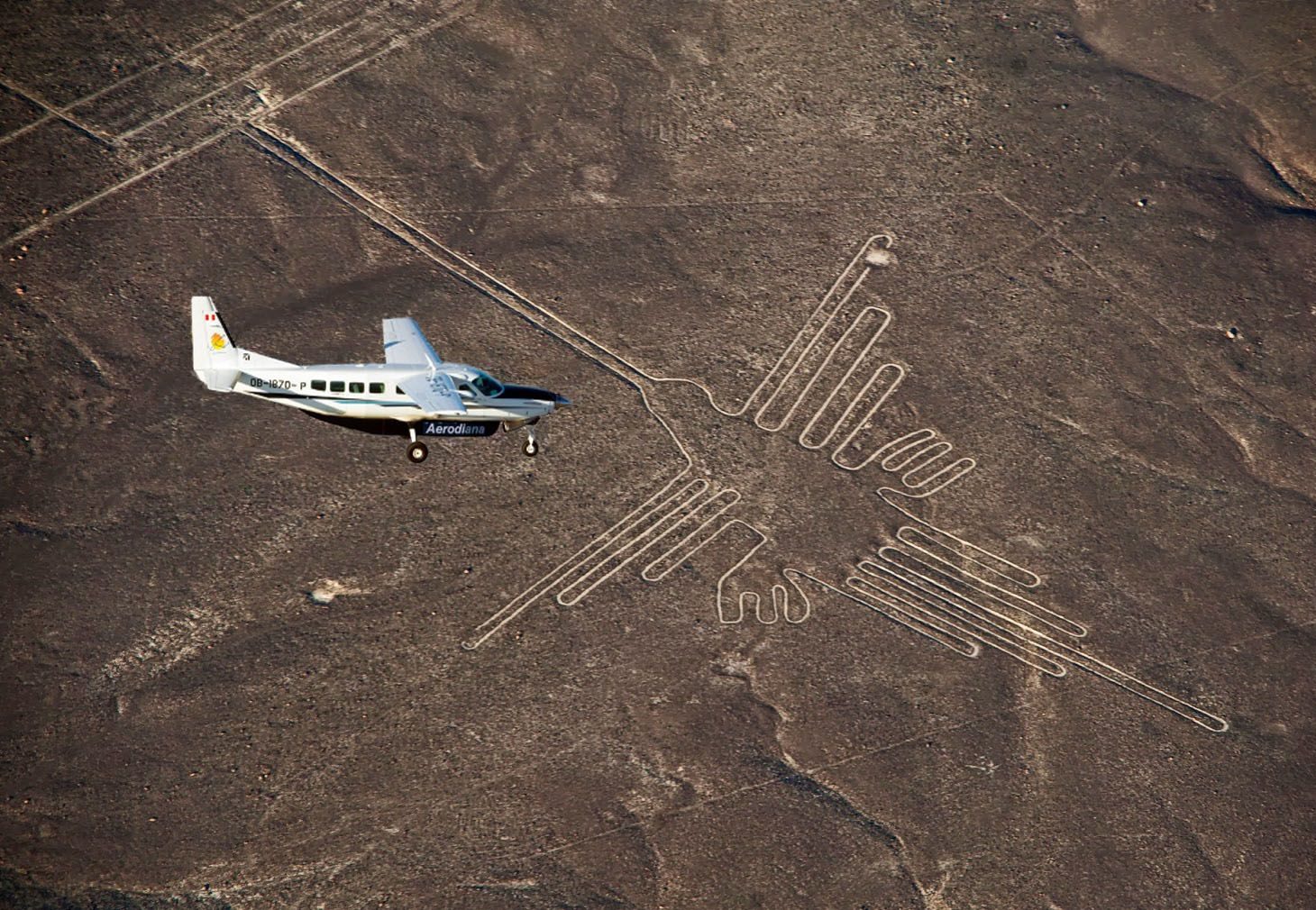
Nazca Lines from Nazca
Nazca · Airfield · Nazca Lines

Fly over the geoglyphs that a civilization carved into the pampa more than 1,500 years ago—geoglyphs that can only be fully appreciated from the air—which have been designated a UNESCO World Heritage Site.
Nazca · Airfield · Nazca Lines
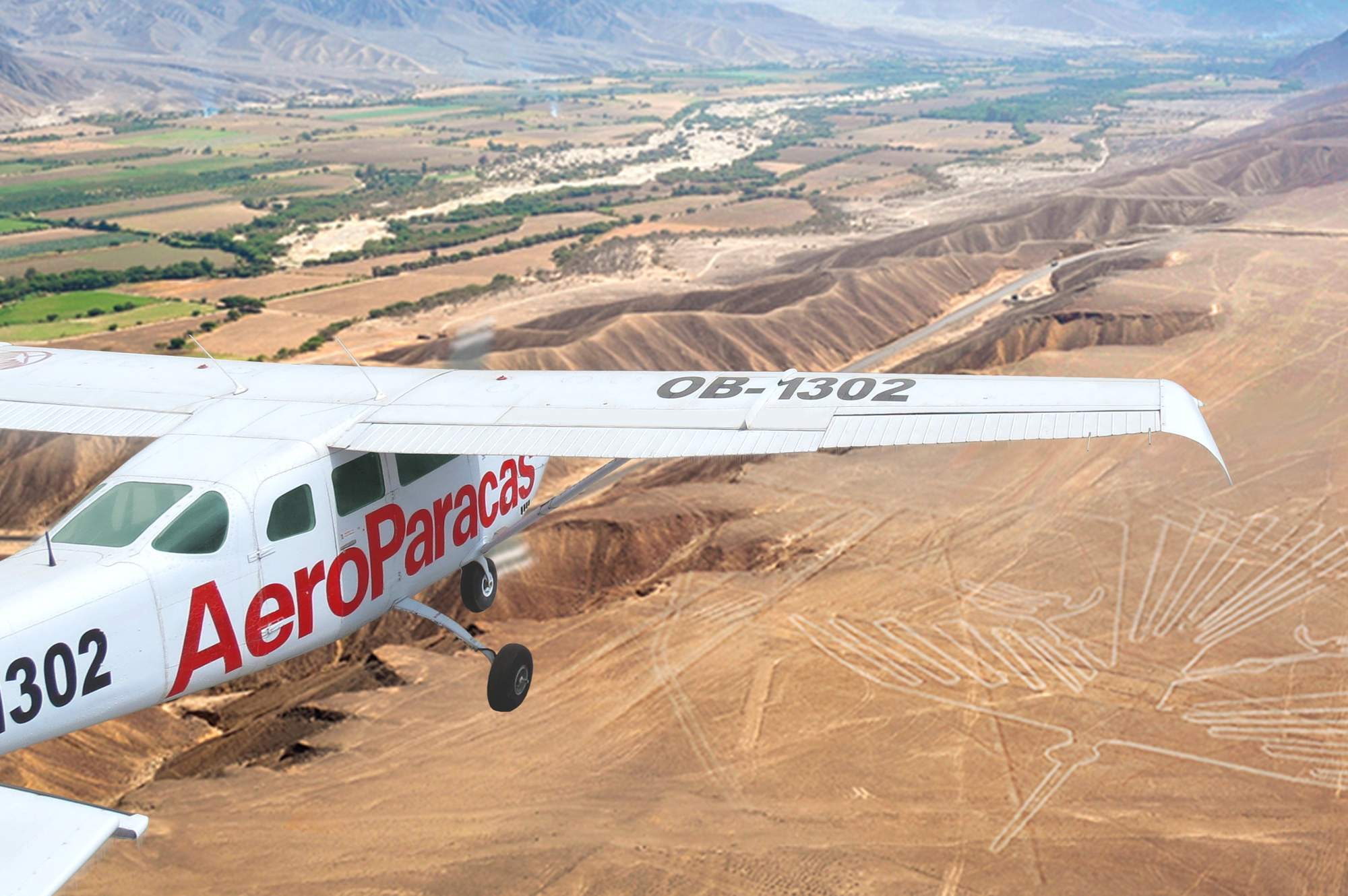
Paracas · Pisco Airport · Nazca Lines
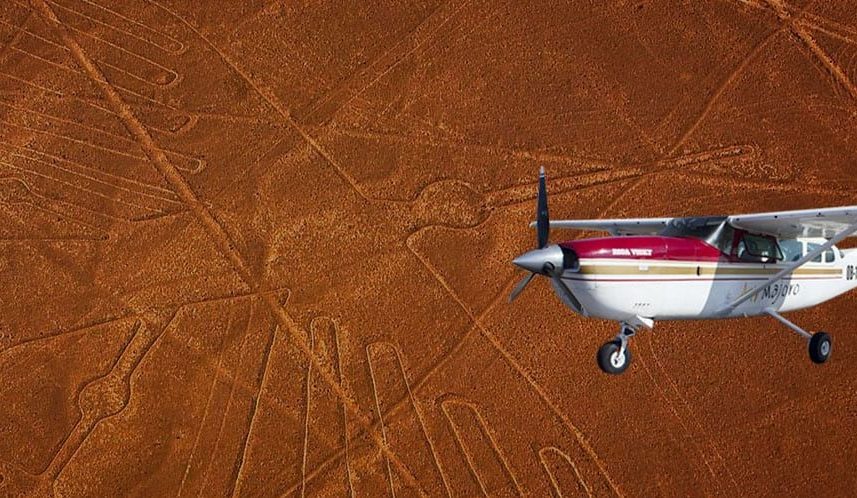
Nazca · Nazca Lines · Chauchilla · Artisan Workshops
 2 days
Ideal for: Travelers interested in culture and the desert
 3 days
Ideal for: Travelers who want to explore the southern coast by land
 20 days, 19 nights
Ideal for: Travelers looking for a comprehensive tour of Peru that combines culture, nature, and hiking in the Andes.
 11 days, 10 nights
Ideal for: Travelers looking for a cultural tour of southern Peru
 14 days, 13 nights
Ideal for: Travelers looking for a comprehensive cultural tour of the south
 3 days, 2 nights
Ideal for: Travelers looking for nature, the desert, and a scenic flight
 2 days, 1 night
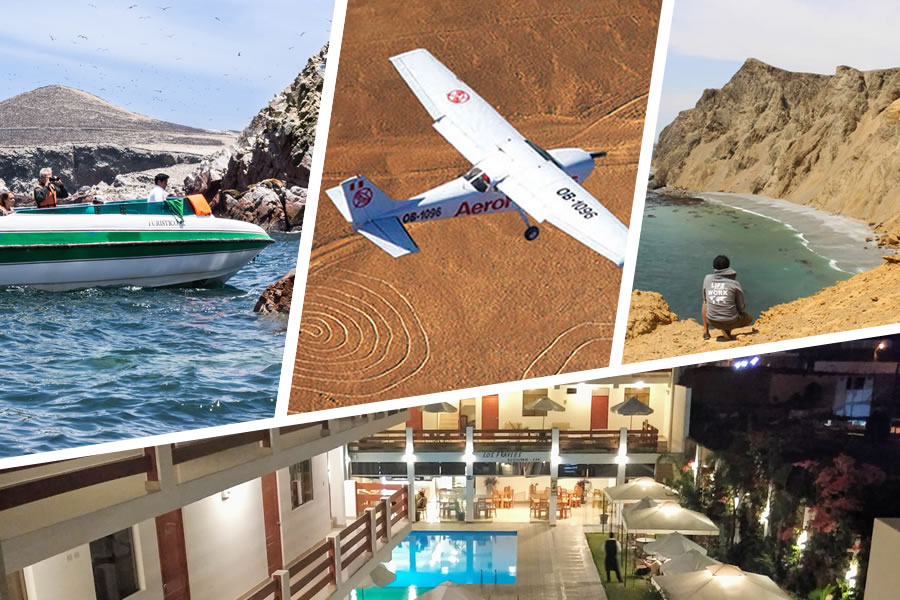
Ideal for: Travelers who want to combine marine wildlife and geoglyphs
 2 days, 1 night
Ideal for: Travelers who want to experience both local culture and aerial views
 2 days, 1 night
Ideal for: Travelers looking to combine three destinations in two days
Via the Pan-American Highway South, 450 km. Overnight and daytime sleeper buses with frequent departures.
A short section that allows you to combine dunes and trails on a two-day hike.
There is also a flight that takes off directly from the Pisco airfield, without any ground transportation.
Nazca is one of the driest places on the planet: it hardly ever rains, and the sun shines year-round, with temperatures ranging from 15 °C to 32 °C. That extreme aridity is precisely what has allowed the lines to be preserved for centuries. Early morning is the best time for a flyover: the air is more stable, there is less turbulence, and the low-angle sunlight better highlights the outlines of the figures. Around noon, the heat generates updrafts that make the flight more bumpy. From December through March, temperatures are higher, but this does not affect operations.
The flight over the main attractions lasts between 30 and 35 minutes. Including the pre-flight briefing, passenger check-in, and the wait at the airfield, you should set aside about two and a half hours for the entire activity.
Partially. From the overlook on the Pan-American Highway, you can see three figures, and from some nearby hills, you can make out scattered outlines. But the complete figures can only be fully appreciated from the air.
It can make you dizzy. The small plane circles each figure, tilting first to one side and then to the other so that all passengers can see it, and that creates a sense of motion. Flying early in the morning, eating a light breakfast, and taking an anti-nausea medication can greatly reduce discomfort.
From Nazca, the flight is shorter and cheaper, because the airfield is right next to the geoglyphs. From Pisco, you avoid the three-hour overland trip, but the flight is longer and more expensive.
Yes. The planes are small, and each passenger is weighed before boarding to distribute the load. In some cases, a surcharge is applied for passengers exceeding a certain weight.
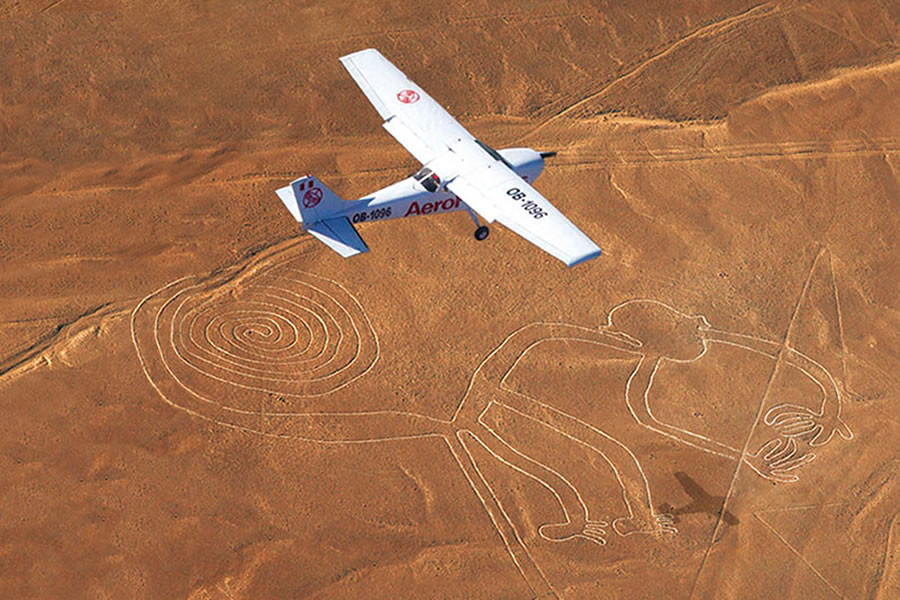
The Nazca Lines are one of the world’s most famous archaeological mysteries. On a pampa spanning more than 500 square kilometers, between 500 B.C. and 500 A.D., the Nazca culture removed the top layer of dark stones to reveal the light-colored desert soil, creating figures of animals, plants, and geometric shapes measuring up to 300 meters. UNESCO designated them a World Heritage Site in 1994.
The only way to appreciate the figures is from the air. The light aircraft flight lasts just over half an hour and takes in the best-known ones: the hummingbird, the monkey, the spider, the condor, the dog, the hands, and the so-called “astronaut,” carved into the side of a hill. The pilot tilts the aircraft to each side so that all the passengers can get a good look at them.
The fact that the lines have survived for nearly two millennia can be explained by the climate: Nazca is one of the driest places on the planet, with no significant rainfall for decades and winds that sweep away the sand without erasing the lines.
The destination also features the Cantalloc aqueducts—a system of spiral underground canals that still draw water from the subsoil to irrigate crops—and the Cahuachi ceremonial center, with adobe pyramids in the middle of the desert. Nazca is seven hours from Lima and two hours from Ica via the Panamericana Sur highway, making it easy to include in itineraries that also feature Paracas and Huacachina.
Book now and receive personalized advice to help you choose the perfect experience in Paracas and southern Peru.
Book via WhatsApp nowRegistered and regulated travel agency